

If you’ve ever been in a district leadership meeting where one leader suggested calling a principal directly to talk to them, another recommends sending a Teams message, and another lead proposes sending a quick voice memo, you’ve seen it firsthand: generational differences are real and they matter.
In K–12 education, where collaboration, trust, and communication are foundational to success, understanding these differences isn’t a “soft skill.” It’s a leadership imperative. How district leads across generations directly impacts staff morale, organizational culture, and ultimately, student outcomes.
Why Generational Awareness Matters in District Leadership
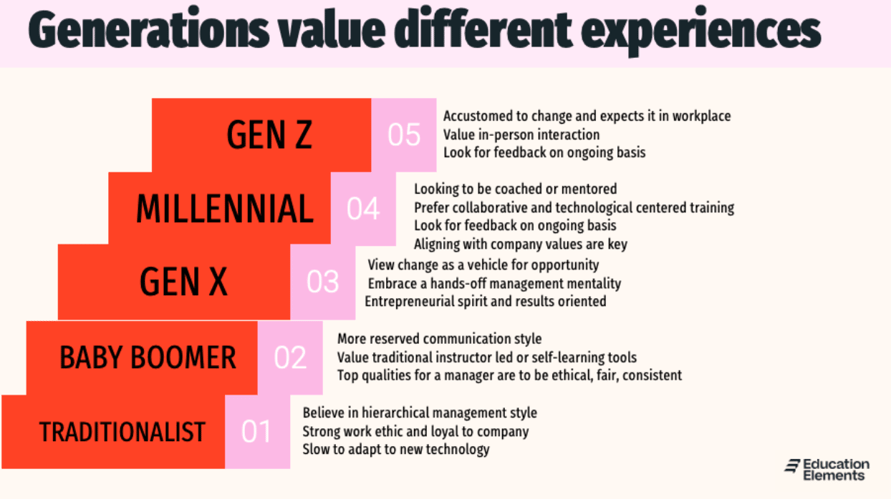
Today’s school districts often include five generations in the workforce: Traditionalists, Baby Boomers, Gen X, Millennials, and Gen Z with Gen Alpha entering the workforce in 2030. Each generation brings distinct values, communication preferences, and expectations shaped by different life experiences.
When leaders overlook these differences, the consequences are familiar:
- Miscommunication is labeled as resistance or disengagement
- Collaboration breaks down across roles or departments
- Turnover increases, especially among early and mid-career leaders
But when leaders intentionally lead with generational awareness, districts unlock powerful benefits:
- Clearer communication: Differences are understood, not judged
- Stronger collaboration: Teams leverage complementary strengths
- Higher engagement: Staff feel seen, respected, and valued
Generational awareness helps leaders move from frustration to fluency.
What Each Generation Brings and How It Shows Up in Districts and Schools
Every generation contributes meaningful strengths to teams:
- Traditionalists bring loyalty, institutional knowledge, and a strong work ethic
- Baby Boomers contribute wisdom, relationship-building, and long-term perspective
- Gen X offers efficiency, independence, and practical judgment
- Millennials lead with collaboration, purpose, and a desire for impact, first digital native (make up 40% of the workforce)
- Gen Z brings innovation, authenticity, and comfort with rapid change but only does what is expected.
The challenge and opportunity for district leaders are not choosing one over another but creating systems and cultures where all can thrive.
Practical Moves District Leaders Can Make
-
Feedback Across Generations: Feedback is often where misunderstandings take root. Each generation tends to prefer a different approach. These notes are generalizations:
- Traditionalists: Prefer formal, scheduled conversations with written follow-up.
- Leadership move: Honor tenure and contribution; provide clarity and preparation.
- Baby Boomers: Value straightforward and personal communication.
- Leadership move: Pick up the phone; affirm their expertise before offering direction.
- Gen X: Wants brief, actionable feedback they can implement quickly.
- Leadership move: Keep it concise; respect autonomy; avoid over-explaining.
- Millennials Look for frequent, growth-oriented feedback.
- Leadership move: Tie feedback to development, purpose, and next steps.
- Gen Z: Prefers real-time, honest input, often through digital channels.
- Leadership move: Use short check-ins, transparent messaging, and conversations grounded in well-being.
- Traditionalists: Prefer formal, scheduled conversations with written follow-up.
- Leading Multigenerational Teams: Leading across generations expands your playbook.
- Use multiple communication modes.
- One message might be emailed, texted, and posted in Teams, because each method reaches someone different.
- Normalize asking, not assuming. “How do you prefer to receive updates?” This is a powerful question.
- Design meetings intentionally. Boomers appreciate an agenda. Gen X wants efficiency. Millennials want collaboration. Gen Z wants purpose and clarity.
- Lift up generational strengths publicly. Nothing builds culture like naming what people contribute. When teams feel seen in the ways they naturally operate, collaboration becomes smoother and less draining.
- Hiring with Generational Awareness in Mind: Candidates across generations look for different signals:
- Boomers & Traditionalists. Stability, ethical leadership, and opportunities to mentor.
- Gen X. Autonomy, efficiency, and clear expectations.
- Millennials. Growth pathways, teamwork, and mission alignment.
- Gen Z. Flexibility, mental health support, and tech-forward environments.
- Thoughtful job descriptions and interview conversations that speak to these differences expand your applicant pool and strengthen retention.
Leading Into Generational Diversity
Generational differences can either create friction or fuel transformation. District leaders set the tone. A few questions worth carrying into your next cabinet meeting:
- Where are generational differences showing up right now?
- Where might these differences be an untapped strength?
- How might communication or feedback shift if your team named these dynamics openly?