

A few weeks ago, I was sitting with a district HR team reviewing their hiring patterns from the past three years. We were talking about where candidates were falling off in the process when one director paused and said, almost to herself, “It feels like we’re speaking a different language than the people we’re trying to hire.” Everyone around the table nodded.
A familiar moment, the kind that captures why the traditional employee life cycle no longer fits the workforce we serve. Education may be rooted in tradition, but the people who make our schools come alive bring wildly different expectations shaped by different generations, perspectives, and cultural shifts. The traditional model of attract, recruit, onboard and retain was built for a different era. Today’s model has to feel more like a relationship and less like a sequence of steps.
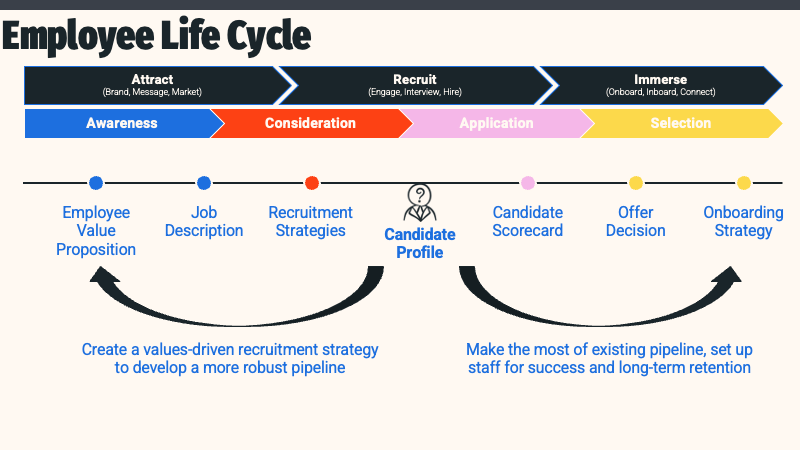
Let’s reimagine the traditional attract, recruit, onboard, and retain framework into a modern employee lifecycle that reflects the needs and expectations of today’s workforce.
Attract: Lead with Authenticity, Not Advertising
Attraction is no longer just about flashy job postings and career fairs. Today’s candidates seek alignment with organizational values and culture. This means districts need to have: o Employee Value Propositions (EVP): Clearly articulating what makes your district unique, and what’s in it for your staff. Employees want to know how their work contributes to something meaningful, as well as the benefits of working for your organization.
Brand Messaging: Go beyond marketing. Share authentic stories from current employees and demonstrate commitment to their growth and support. What is the impact and value, and how does this show up for not just staff, but students as well? o Market Awareness: Understand where your ideal candidates are and engage them in the spaces they trust. That might mean going beyond Facebook and trying Tik Tok and Instagram and other forms of social media and engagement.
Recruitment: Less Transaction, More Connection
For years, recruitment was treated like a compliance process. Post, screen, interview, hire but not anymore. Candidates today want transparency, feedback, and a sense that the district is as invested in the conversation as they are. They notice whether the hiring team follows up. They notice the tone. They notice whether anyone explains why the position exists or how success will be measured. Districts need to think about:
- Job Description: Move beyond a list of tasks, highlight impact, growth opportunities and culture fit.
- Recruitment Strategies: Use a value-driven approach to create robust pipelines that are efficient but maintain human connection.
- Candidate Profile and Scorecard: Define success and not just skills, but by adaptability, collaboration and alignment to district mission and vision. You should have a mixture of technical and relational skills and competencies you want your employees to bring.
Immerse: Setting Up for Success and Retention
This is the stage districts most often underestimate. A new hire’s first impression of a workplace doesn’t end with the offer letter, it unfolds over time. The strongest districts view onboarding as a long arc, not a one-day orientation. Beyond that, effective districts also invest in inboarding, a strategy that personalizes support and growth well past the first 90 days. Districts need to rethink:
Students internalize readiness when they practice it. The 1% Instructional Shifts—collaborative problem solving, reflective routines, student-led discussions—support teachers in incorporating competencies into everyday learning. POG Proficiency Scales deepen alignment by clarifying what competency looks like at different stages of development.
- Onboarding Strategy: Go beyond paperwork and compliance training. Create an immersive experience that connects new hires to each other and the mission.
- Inboarding Strategy: How do you continue to develop employees beyond their first 30, 60, and 90 days?
- Short Term Retention Focus: Think ahead and remove barriers that could occur in the first several months. Example, provide a new teacher with extra time to write lesson plans, or mentors to support.
- Long Term Retention: What does your retention strategy look like for the next three years? Make sure to include pulse checks along the way and use feedback to adjust and differentiate support.
Why Generational Perspectives Matter
How district leaders hire, retain, and lead across generations directly impacts staff morale, organizational culture, and ultimately, student outcomes. To achieve this, consider reimagining the employee life cycle through generational perspectives too, as today’s workforce spans five distinct generations. Here are a few ways to do that:
-
Hiring Across Generations: Strong hiring and retention practices recognize that candidates are motivated by different things, communicate differently, and have different expectations on workplace culture and opportunities.
- Boomers & Traditionalists often value stability, ethical leadership, and opportunities to mentor
- Gen X looks for autonomy, efficiency, and clear outcomes
- Millennials are drawn to collaboration, growth pathways, and meaningful work Gen Z prioritizes flexibility, mental health support, and tech-forward environments.
-
Professional Growth & Retention: These look different across generations. Understanding these differences enables leaders to better support each generation’s
-
Traditionalists: Offer opportunities to share institutional knowledge through mentoring.
- Boomers: Recognize their experience and invite them to lead strategic initiatives.
- Gen X: Provide autonomy and flexibility in how they achieve results.
- Millennials: Create pathways for leadership development and purpose-driven projects.
- Gen Z: Invest in tech-forward training and emphasize mental health and work-life balance Professional Growth & Retention: These look different across generations. Understanding these differences enables leaders to better support each generation’s needs.
-
The Workforce Is Changing. Our Systems Must Change.
Employees today expect flexibility, purpose, clarity, and growth. They want a connection to the mission and a workplace that values their voice, not just their output. The most successful districts are those willing to look honestly at their systems and ask:
- What would it look like to build a life cycle that mirrors the workforce we actually have, not the one we used to have?
- Who is thriving and who is not?
- Where does our current onboarding reflect an outdated model?
At Education Elements, we’ve supported districts across the country as they reimagine their employee experience from attraction through long-term retention. The changes don’t have to be dramatic, but they do have to be intentional.
If you’re exploring what this could look like in your district, we’d love to continue the conversation and help you design a model that feels human, aligned, and built for the team you want to keep.