



As an Instructional Leader, I remember sitting at my desk before the start of each semester, contemplating how to manage the competing needs of my teachers and still have time for lunch. I supported five new teachers, all in different content areas with different curricula (or none), which added to this stress. I began to shift my mindset to discover that natural breaks in the year—such as new quarters/semesters or the beginning and end of the school year—hold significance. These times created an opportunity for a mini-reset to reimagine and prioritize our work. Here are six tips for leaders looking to adopt a new curriculum:
1. Reground in the instructional vision
So often, we can lose sight of our overall purpose when we’re in the midst of our work. Before you build out your goals, remind yourself of where your team is headed to make sure you are building towards the same goal. If you did not have the opportunity to set a vision at the beginning of the year, I invite you to check out these resources on how to create an instructional vision. When I remind myself of our instructional vision, it allowed me the freedom to make hard decisions about how to spend my time to align with this vision and goals.

2. Define your role within the instructional implementation
Whether you’re an Assistant Principal, an Instructional Coach, a Director of Curriculum, or hold a different instructional role, it’s critical to understand your unique position in supporting curriculum implementation. Do you develop the strategy for implementation? Are you focused on growing teacher capacity to plan or adopt curriculum? Do you plan and lead professional development at your site? By determining what is in your focus of control for the remainder of the school year to support curriculum implementation, you can focus and prioritize your efforts. While supporting the instructional vision through the lens of professional learning is connected to internalization and practice, the scale, audience, and aims of these efforts can be different, so it is helpful to unpack them separately.
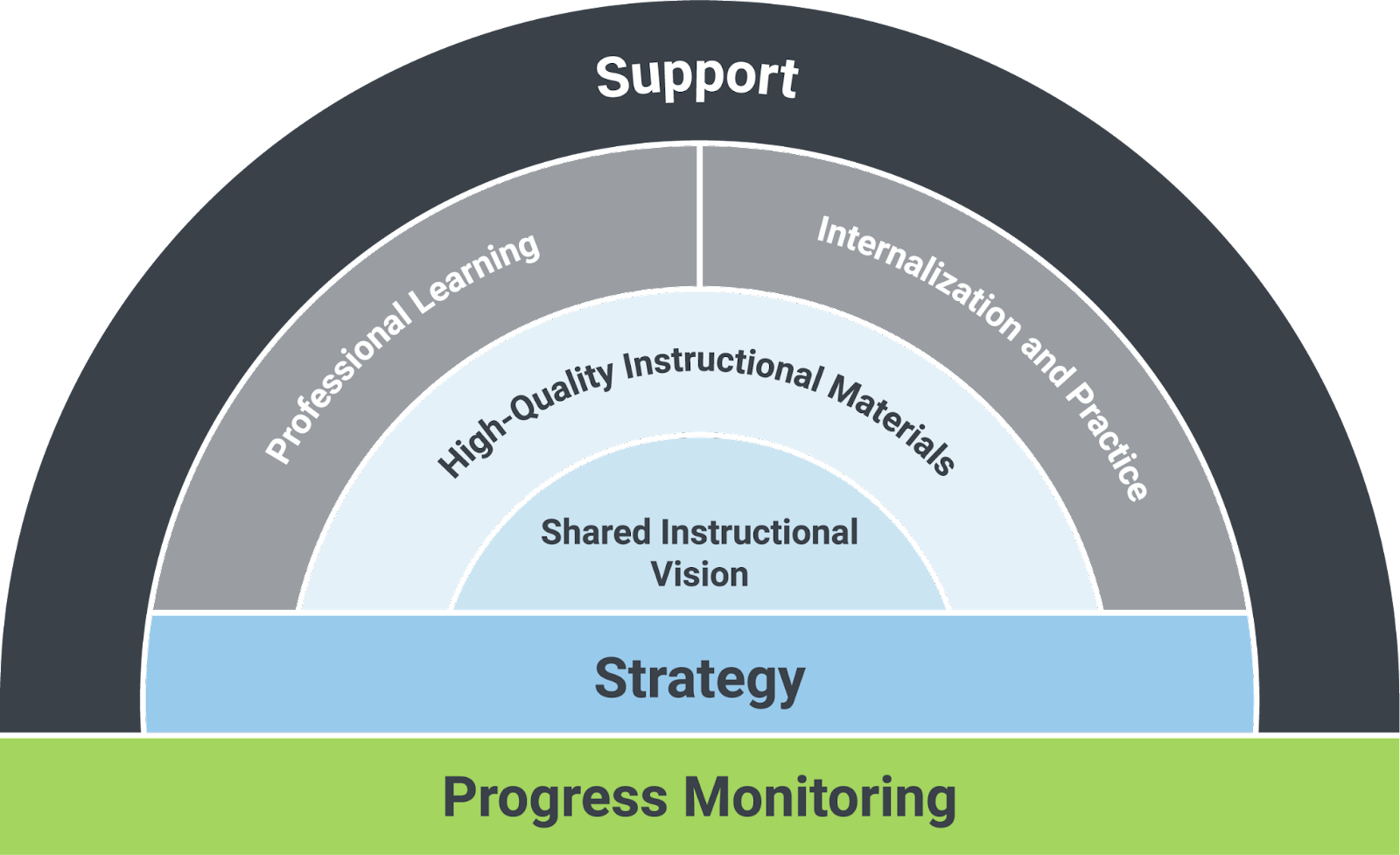
3. Consider Different Professional Learning Structures
If your work emphasizes professional learning, consider different structures that align with your specific circumstances. The Aspen Institute offers real-world models that combine learning, implementation, and reflection in different cadences based on goals and staffing capacity. Your goals might include building out a new learning model to pilot with a specific department or grade level or growing your capacity to understand best practices in adult facilitation. As you design or refine these new support structures, consider what learning and development you need as a leader. When considering my cohort, I realized I needed to tailor learning experiences based on curricular supports to reach our instructional vision.

4. Internalization and Practice: Assess Your Current Expertise
If your work focuses on supporting teacher internalization and practice, begin with an assessment of your current expertise. Are you adept at navigating the curriculum and able to support teachers with this? What are the negotiables and non-negotiables for teachers in terms of curriculum use? Are teachers clear on these expectations? Have teachers attempted to implement the materials in the past but given up after finding the new routines difficult? Choose a goal that is aligned with your current reality. If teachers need more support navigating and implementing the curriculum, consider providing individualized feedback to teachers on internalization through lesson plan submission. If teachers are struggling with trying new learning protocols, create an environment where teachers can practice new routines with colleagues or leaders. This will enable them to receive feedback before using the protocol with students and build their confidence. As a Coach, this was my favorite part of the work, but also where I wanted to spend the most time. I discovered that I was able to target the support I offered teachers by grounding in the evidence I gathered from lesson plan review and beginning of the week walkthroughs.
5. Define your metrics
Another important piece of resetting is to revisit your metrics. How will you measure and understand the impact of the curriculum on teachers and students? This might include obvious measures like student test scores or teacher evaluations. It might also include walkthroughs to determine if teachers are on pace or using provided resources or engaging in PLCs around student work analysis. Consider both program-wide and teacher-specific metrics to foster commitment among staff and measure the impact of curriculum implementation program-wide. Defining metrics can be a vulnerable process. As an Instructional Leader, my teachers’ data was a reflection of my support in professional learning and internalization in practice. By ensuring that my goals were aligned with my team and were challenging and meaningful, it supported us in achieving our vision.
6. Celebrate Growth and Success
As we ask teachers to engage in the work of receiving feedback, refining their practices, and implementing new instructional materials, we must regularly acknowledge their progress and achievements. Watching the teachers I worked with implement a high-quality lesson that impacted students gave me immense joy. Yet, so often during a debrief of these lessons, teachers came in worn down from the day, unable to recognize the impact and growth they had on their students. I began asking at the beginning of every coaching conversation, “What is something great that happened today and what teacher action made it happen?” This simple act of reflection allowed my teachers to recognize their progress and see the momentum in their work. James Clear notes in Atomic Habits, “The purpose of setting goals is to win the game. The purpose of building systems is to continue playing the game. True long-term thinking is goal-less thinking. It’s not about any single accomplishment. It’s about the cycle of endless refinement and continuous improvement. Ultimately, it is your commitment to the process that will determine your progress.”